
Gum and Periodontal Disease Treatment
Healthy gums are an important part of keeping your natural teeth healthy for life. Gum disease begins when plaque and bacteria accumulate around the teeth and gumline, causing inflammation in the surrounding tissues. In its earliest stage, known as gingivitis, you may notice gums that bleed when you brush or floss, redness or swelling. For some people, however, the changes are subtle enough that they may not realize there is a problem.
When gum disease progresses, the gums can begin to pull away from the teeth and form deeper spaces where bacteria can collect. This more advanced form of gum disease, called periodontitis, can eventually affect the tissues and bone that support the teeth. Without appropriate care, periodontal disease may contribute to gum recession, changes in the way teeth fit together and, in advanced cases, loose or lost teeth.
At Michigan City Family Dentistry, we pay attention to your gums as well as your teeth. Evaluating gum health allows us to look for signs of inflammation, gum recession and other changes that may indicate periodontal disease. When we identify a concern, we will explain what we are seeing and discuss the treatment or ongoing care that may be appropriate.
Dr. Oluseyi Ayangade, known to his patients as Dr. A, is a periodontist, with additional training focused on the gums and other structures that support the teeth. This allows many patients with periodontal concerns to receive their gum care from the same Michigan City dental practice they already visit for their general dental needs.
One of the challenges with gum disease is that it does not always hurt. You may feel perfectly comfortable while changes are occurring below the gumline. Regular dental exams and cleanings can help us identify concerns that may otherwise go unnoticed and give you an opportunity to address them before the disease progresses further.
Whether you have noticed bleeding gums, have previously been diagnosed with periodontal disease or simply want to protect your gum health, we can evaluate where you are today and help you understand the next steps.

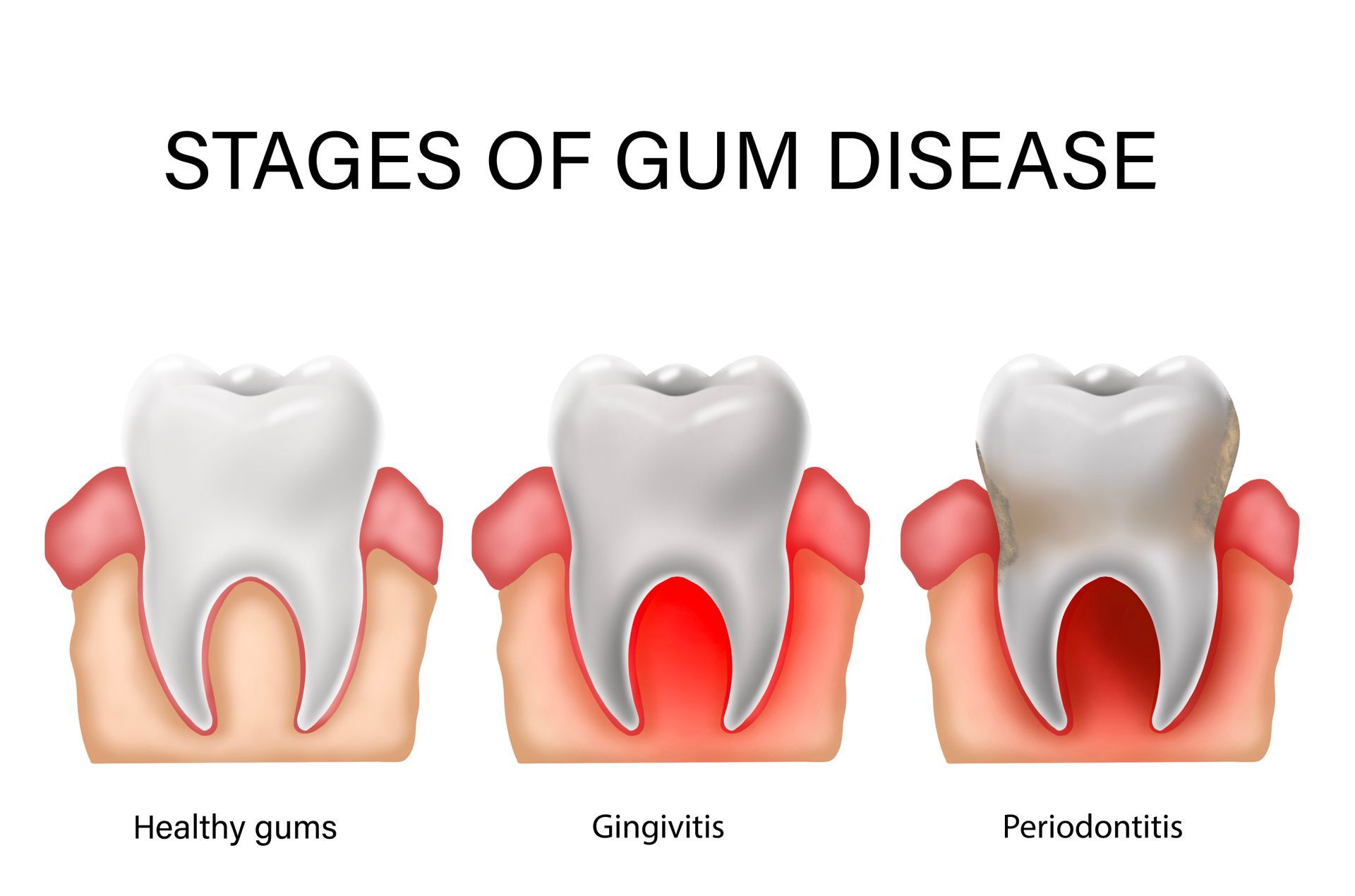
Stages of Gum Disease
Gingivitis is the earliest stage of gum disease. The gums may appear red or swollen and may bleed when brushing or flossing. At this stage, the disease has not yet caused permanent damage to the bone supporting the teeth. With professional care and consistent oral hygiene, gingivitis can often be reversed.
Periodontitis develops when gum disease progresses below the gumline.
Spaces called periodontal pockets can form between the teeth and gums, allowing bacteria to collect in areas that are difficult to clean at home. Over time, the infection and inflammation can damage the tissues and bone supporting the teeth.
Because periodontal disease can progress without significant discomfort, it is important not to rely on pain as the only indication that something is wrong.
Signs of Gum Disease
Some changes in your gums are easy to overlook. Talk with us if you notice:
- Gums that bleed when brushing or flossing
- Red, swollen or tender gums
- Gums that appear to be pulling away from your teeth
- Persistent bad breath
- Teeth that appear longer because of gum recession
- Changes in the way your teeth fit together
- Loose or shifting teeth
Having one of these symptoms does not necessarily tell us how advanced a condition is. A dental and periodontal evaluation can help determine what is happening and whether treatment is needed.
Scaling and Root Planing for Periodontal Disease
Scaling and root planing is a nonsurgical treatment commonly used when gum disease has progressed below the gumline. It provides a deeper cleaning than a routine dental cleaning and is intended to remove plaque and hardened deposits from areas that cannot be adequately reached with regular brushing and flossing.
During scaling, deposits are carefully removed from the teeth and from below the gumline. Root planing smooths the root surfaces to help create a cleaner environment as the gums heal.
The treatment recommended for you will depend on the condition of your gums, the depth of the periodontal pockets and other findings from your examination. We will explain what we find and what treatment we recommend before proceeding.
Maintaining Your Gum Health After Treatment
Periodontal treatment does not end when the initial procedure is completed. Once someone has developed periodontal disease, ongoing care can be important for controlling the condition and reducing the risk of further damage.
Depending on your individual needs, we may recommend periodontal maintenance appointments on a schedule that differs from routine six-month cleanings. These visits allow us to clean areas that are difficult to reach at home and monitor your gums for changes.
Your daily routine matters as well. Brushing thoroughly twice a day, cleaning between your teeth and following the recommendations of your dental team all play an important role in managing periodontal health.
When to Have Your Gums Checked
You do not need to wait until your gums hurt to have them evaluated. If your gums bleed frequently, appear swollen or receding, or you have noticed a loose or shifting tooth, schedule an appointment so we can determine what is causing the change.
Even if you have not noticed symptoms, we can evaluate your gum health during your regular dental visits. Finding gum disease earlier may allow it to be addressed before more extensive damage occurs.
Call (219) 871-7171 to schedule an appointment with Michigan City Family Dentistry.